

Mexican Flowers || Top 25 Mexican Garden Plants to Add to Your Garden
Mexico is among the nations with the highest biodiversity in the world. Its bountiful and lush land bestows upon us an abundance of fruits, flowers, and plants that are visually appealing and provide a plentiful supply of food and protein for many people. We reveal the most exquisite Mexican Garden plants to give your house a distinct national identity.

Following are the Mexican Flowers
Discover the vibrant beauty of Mexican flowers. From the iconic marigolds to the stunning bougainvillaea, our guide showcases various colourful and exotic blooms that will transform your garden into a captivating oasis. Explore our collection and bring the spirit of Mexico to your outdoor space today.
Dahlia
You can see Dahlia Mexican flowers all over the globe. They are the gardener’s favorite from Paris to the United States. It represents the nation’s legacy, along with the national flower of Mexico. It is widely regarded as a source of national pride.
It has 43 species in bright colors that attract a large audience, out of which 35 are endemic to the country. They are beautiful but require a lot of care and maintenance. If you plan to plant them in your house, make sure to water them once every 2 weeks without soaking the leaves. Please place them in a warm location to meet their growth requirements and prune them early in the day or late at night.

Aztec Lily
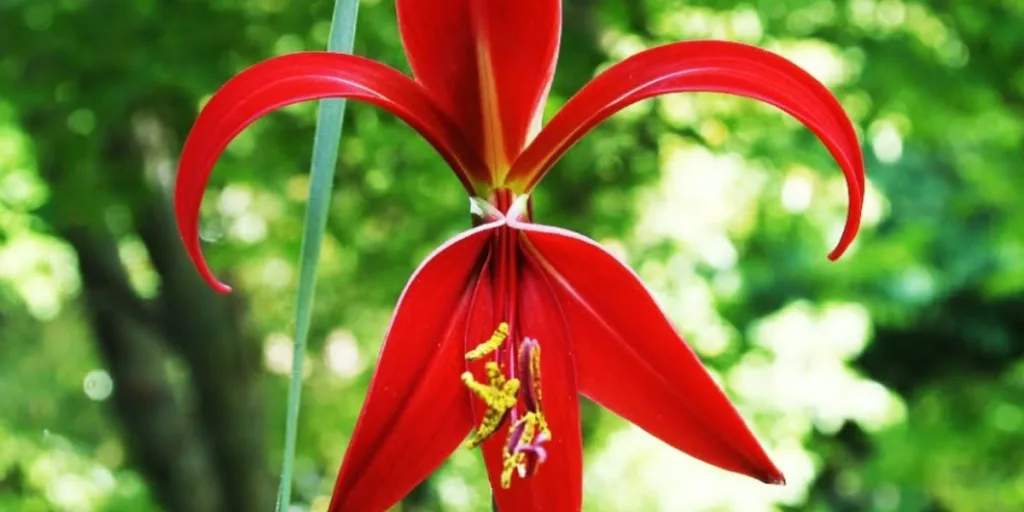
Aztec Lily, the fleur-de-lis, are Mexican Flowers of unmatched beauty and a stylized shape that stands out for its scarlet red colour.
Its original home was in Mexico and Guatemala but is now grown worldwide. It typically grows in rocky and grassland environments, though it can also occasionally be found around plot boundaries and in disturbed vegetation.
These Mexican Flowers is ideal if you don’t have enough time to take care of your plants because it can be grown in small indoor or outdoor spaces and is low maintenance due to its size. It can also be bought in a pot.
Marigold
The marigold is a well-known Mexican Flower, used as a decorative element during the Day of the Dead event. It is not just beautiful, but it has an aroma believed to attract the soul and guide them toward the temple. Its petals signify happiness and the way towards the temple.
The petals of the marigold are widely used to decorate the streets, altars, and offerings during the Day of the Dead celebration. They have been used since pre-Hispanic times to guide the path to the temple for the souls.It’s also known as cempasuchil, which means ‘flower with twenty petals’ in Nahuatl. It possesses numerous medicinal properties, including anti-oxidant and deworming effects.

Calla lilies
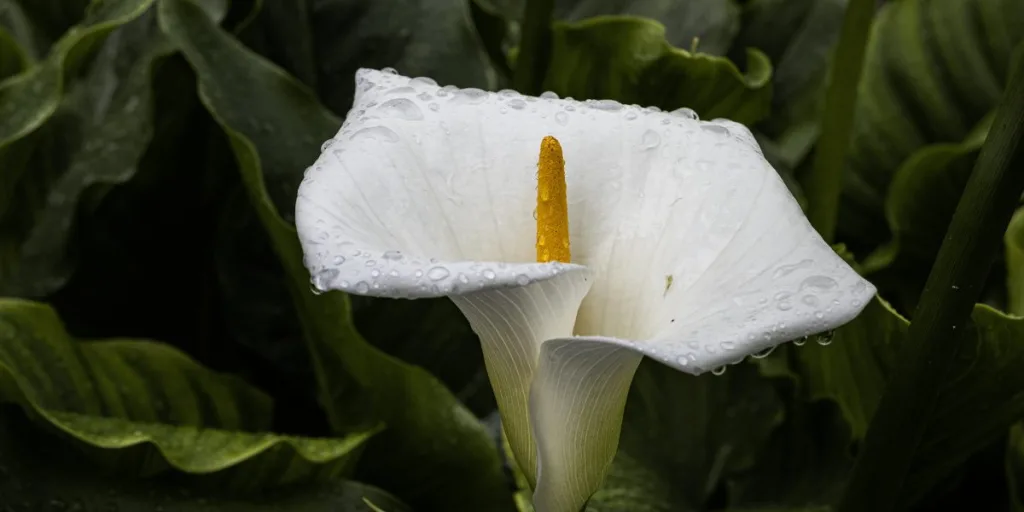
These graceful blossoms, featuring long, verdant stems and a trumpet-shaped blossom at the top, are undoubtedly among the most emblematic of Mexico.
Though mostly white, artificial or natural versions can be more colourful, so consider that.
Magnolia
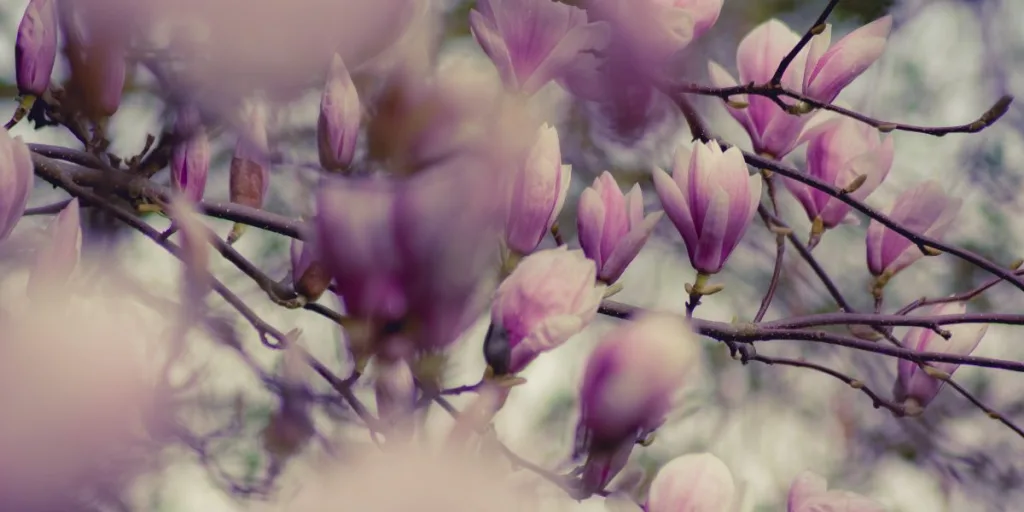
Magnolia means “heart flower” in Nahuatl, where “xóchitl” is “flower” and “yolotl” is “heart.” This flowering tree, which is native to western Guatemala and southern Mexico, has leaves that are yellowish green on the back and brilliant green on the front.
The magnolia, widely used in cosmetics and fragrances, has a wonderful scent that always amazes people. Sadly, the Official Mexican Standard lists the magnolia as a threatened species.
Though its full range of benefits is still unknown, the tree’s wood is primarily used for carpentry work, and its flower is also used in traditional medicine to treat heart problems.
Franciso Hernández de Toledo wrote about its applications for infertility, heart, and stomach strengthening in the sixteenth century.It produces smooth, spherical, white, solitary, and visually pleasing flowers.
Bougainvilleas
Another national Mexican flowers are bougainvillaea, which is customarily used to adorn the entrance of significant events like weddings, civil ceremonies, or religious ceremonies with floral mats.
On the other hand, this plant is used medicinally in Mexico to treat respiratory ailments like flu, bronchitis, asthma, and cough.

Acapulco flower
Mexican Flowers that are typically used to adorn the entrance with floral mats at significant events like weddings, civil ceremonies, or religious ceremonies is bougainvillaea.
But this plant has medicinal properties in Mexico, where it treats respiratory ailments like flu, bronchitis, asthma, and cough.

Mexican Orange Blossom
Orange blossoms are small to medium-sized shrubs with beautiful springtime blooms and evergreen foliage. Its blossoms are similar to those of the Rutaceae family, which includes the true orange tree, with which it is related.
Considering that it is Mexican in origin, it prefers warm to moderate temperatures and becomes ill at temperatures below -7 degrees (USDA 9). Once established, it is a medium-growing plant that can withstand periods of drought and urban pollution.
The three leaflets that make up the leaves resemble those of an orange tree in tone, shape, and glossy appearance. They also have an aromatic quality.
These Mexican flowers are grouped in dense corymbs and resemble white stars with five rounded petals and a striking yellow stamen in the centre. They draw butterflies and bees because they smell good.
Growing the Mexican orange tree in a pot also lets you enjoy the citrus scent of its flowers and leaves on a patio or terrace, even though you can still enjoy it in the garden as a solitary specimen or in beds or borders.
Grown in a pot, the development of these vigorous shrubs, which can reach two by two meters in the ground, is reduced. Remember to irrigate, particularly during the summer, is crucial in these situations.

Prickly Pear
They’re known as “Opuntia,” all over this place. Some are small, some are enormous, and some grow through fences as fearsome spikes protrude from flat, seemingly flat pads. This genus of cacti is edible, though some are less tasty than others because they have more seeds or spines.
Even the petals of the young Mexican flowers and the fruits of prickly pears seem edible. The fruits are fully ripe by mid-August, but don’t pick them until they are completely red. They start to bloom in May. They taste, look, and feel like pomegranates. Some have compared them to a cross between bubblegum and watermelon, kiwi, pear, and watermelon.
Prickly pears are rich in antioxidants and have additional health benefits. They have high levels of vitamin C, calcium, magnesium, and potassium, supporting liver health and reducing inflammation.
Mexican Flowers and fruits take three to four years to sprout from seeds. Seeds should be kept moist until they germinate, which requires shade. Mulches are much easier to propagate from and yield quicker results. Chop and plant a mulch; a good barrier that deters wild animals will eventually form when multiple mulches are planted together.

Firewheel
These intriguing Mexican Garden plants, Stenocarpus sinuatus, is indigenous to Oceania’s subtropical forests, which include parts of Australia, New Guinea, and other Coral Sea islands.
It is a large perennial tree that can reach over 30 meters in its native countries. It is a member of the Proteaceae family and has a greyish trunk about 80 cm in diameter.
Its lanceolate, roughly 15 cm long, has wavy edges.
This tree’s main feature is its bright red, highly ornamental flowers arranged in a wheel or circle. They emerge in late February and early March, signalling the start of spring. This tree yields an elongated follicle-shaped fruit that contains seeds.
It favours clay soils that are well-drained and low in calcareous materials. It is a disease- and pest-resistant tree.
When sown in damp soil with adequate light, it reproduces through seeds. It can be planted in any case, though the trees obtained in this instance won’t flower for four or five years.
They are frequently used as ornaments, but only in warm climates without frequent frost.

Mexican Petunia
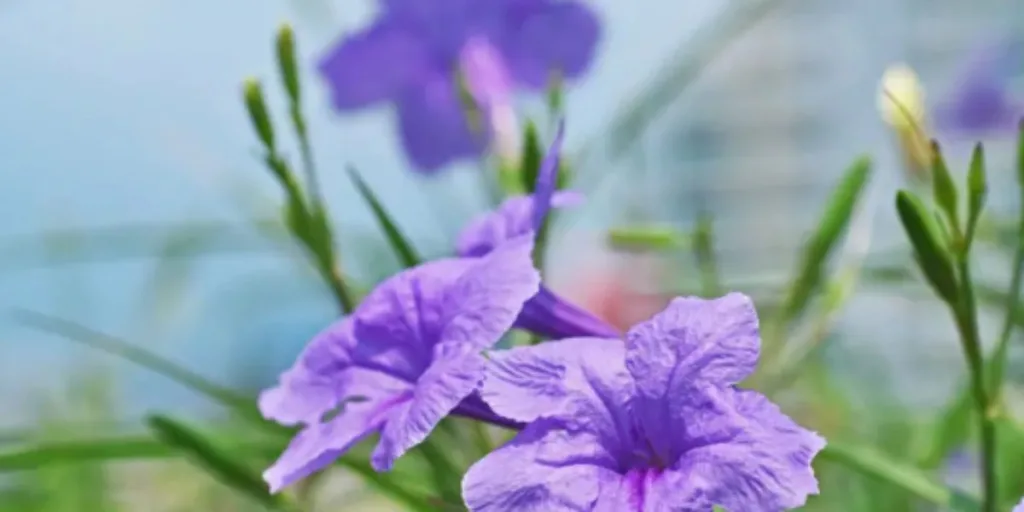
Mexican petunias are perennial Mexican flowers that can be grown as a ground cover in soil or as a shrub in containers.
Even in circumstances that would be less than ideal for many other plants, it grows and spreads swiftly. According to science, the Mexican petunia can withstand heat, drought, too much water, and poor soil. You must keep the plant under control because it can become invasive.
Mexican petunias can withstand overwatering and drought because they tolerate all watering circumstances. Because of this, it can be grown on the banks of shallow streams alongside other swamp plants.
When the soil’s surface is dry, water it. The petunia is the best plant for you if many other plants have died from too much or too little water since it requires less care because you won’t have to water it all the time.
The Mexican petunia produces lilac, roughly 5-cm-diameter flowers that bloom from midsummer to autumn. Although they resemble petunias greatly, the Mexican petunia is not the same as a petunia.
This plant doesn’t need fertilizer because it can thrive in soil with low nutrients. On the other hand, the petunia will produce more foliage if the soil contains a lot of nitrogen. If your plant has trouble flowering, you should test the soil for nutrient imbalances, but the foliage is growing profusely. Applying mulch to the soil’s surface or heavily watering the soil are two ways to remove nitrogen.
Mexican Bush Sage
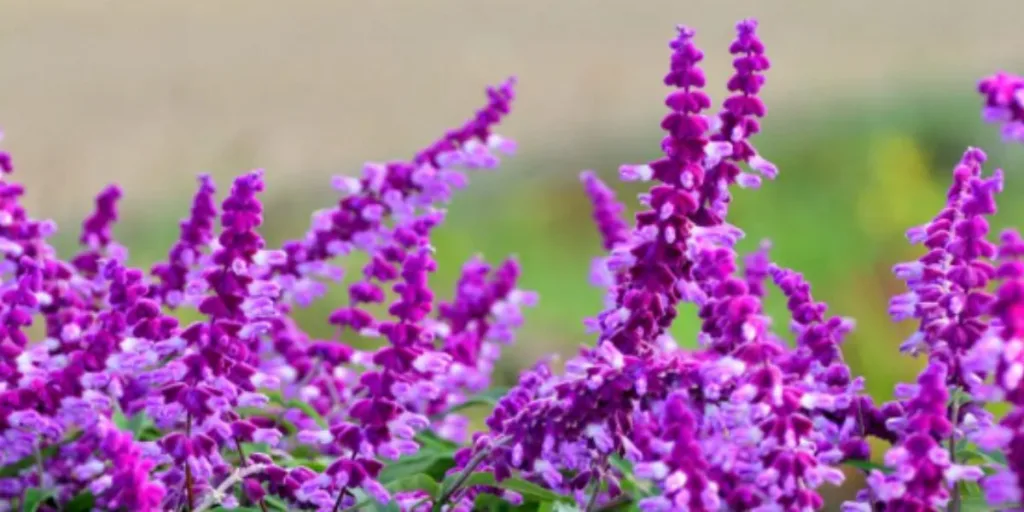
Mexican sage, or Salvia leucantha, is a popular herbaceous plant in garden design. However, a garden’s success or failure will depend on proper management. We provide management advice in this post so you can successfully handle this lovely species.
It belongs to the subshrub group. That is, plants that neither has lignified branches, which give them a firm, bushy structure, nor are they herbaceous because their branches only slightly lignify.
It is indigenous to Central America, including parts of Mexico and other nations in the region. It has a pattern of wide growth. It has a height of 1.5 to 2 meters and a width of the same. They are available in various colors, including purple and white. They also have types with white flowers and long spikes.
Globe Amaranth
Gomphrena globosa, the plant that grows globe amaranth, is 6 to 12 inches tall. Their young growth is covered in fine, white hairs that eventually mature into thick, green stems. Oval-shaped leaves are placed sporadically along the stem.
The amaranth blooms in June and continues into October. They are available in colors pink, yellow, white, and lavender. It’s the plant that requires minimal care with more blooms. It grows before the last froth and starts seeds indoors. It’s a pro tip for planting them: soak them in water before planting to help them germinate quickly.
They require full sunlight and have good drainage. They can grow in soil, but they grow best in garden soil and can also be grown in containers.
This plant is resistant to a wide range of illnesses and pest issues. However, if watered from above, it may get powdery mildew. This issue is avoided by watering the plant in the morning or at its base, which allows it to dry out.
A classic addition to arrangements of dried flowers is globe amaranth plants. The flowers are hung to dry. When the Mexican flowers have a good length of stiff stem, harvest them as soon as they open.

Creeping Zinnia
Gorgeous, low-maintenance ground coverings that gardeners can plug and drop bring them great pleasure. One of these garden favourites that, once planted, offers a season-long feast of colour is creeping Zinnia Sanvitalia procumbens. With its delicate trailing habit, this low-growing beauty is ideal for container arrangements and hanging baskets.
Use creeping zinnia if you have a sunny spot in your garden that needs some colour and the soil drains well. These native Mexican Garden plants will spread up to 18 inches in areas with mild summers and produce lovely orange or yellow flowers that resemble sunflowers from summer through fall.
The best time to plant creeping zinnia ground cover is early spring in a sunny garden. If growing the plant in a container garden, use plenty of drainage, light, and loamy potting soil. Many begin the season by dragging zinnia ground cover seeds indoors in hanging baskets or containers four to six weeks before spring.

Desert Willow
Deciduous trees or shrubs can grow up to eight meters tall with twisted trunks. The leathery leaves are thinner and more akin to those of the oleander (Nerium oleander). They yield fragrant, showy pink (and occasionally purple) flowers with yellow and white accents as lipped tubular flowers.
They can bloom in the spring from their first year of life.These quick-growing Mexican Garden plants can be used as windbreaks, solitary specimens, in bushy groups, and pots for patios and terraces. Seaside gardens are a perfect fit for them.
Chilopsis linearis must be in direct sunlight or, ideally, in partial shade. Despite its preference for warm climates, it can withstand frosts as low as -15 ºC. However, it can lose its aerial portion and reseed in spring.

Peace Lilly
The peace lily is incredibly simple to maintain and has a distinct elegance. Despite not being expensive indoor plants, its slender white flowers and glossy leaves make it an object of desire. While watering is usually only necessary once a week, you can check if it needs moisture by sticking a wooden stick into the substrate.
The ideal soil is light, sandy, and extremely well-drained.Give them regular summertime watering, remembering they can withstand drought. It is advisable to hold off on watering until the soil has completely dried.At the start of summer, fertilize with a nitrogen-rich mineral fertilizer.
Although they don’t require pruning, you can remove old branches and faded flowers once they’ve flowered.They are Mexican garden plants resistant to pests and diseases that only fear excess watering.
It’s a toxic and poisonous plant, and you should avoid it. They contain calcium oxalate crystals and are poisonous to pets and humans. If you have children who are pet owners, ask them to stay away from that plant because it can have adverse effects on their health, causing drooling, a sore mouth, and stomach distress.
Take their woods in late summer for planting, and spring-sown seeds take up to 2 to 3 weeks to germinate. The soil must be moist, and the plant should maintain an average temperature of 18 to 23 degrees Celsius.
The soil around peace lilies must drain well. Additionally, they can only be grown in water, where the plant’s base needs to be above the waterline. This keeps the leaves from being submerged all the time, which could lead to their rotting, and permits the roots to grow in the water.
It is not necessary to report peace lilies frequently because they prefer to be slightly rooted; however, if the roots start to show through the holes at the bottom of the pot, it is an indication that they urgently need to be repotted.

Morning Glory
Around the world, gardeners and flower lovers have fallen in love with the magnificent morning glory flower. It is understandable why this flower has particular significance in Asian cultures, given its exquisite trumpet-shaped flowers and velvety stems. This article will cover all you need to know about the Asian beauty of the morning glory, including its types, characteristics, history, and cultural significance, as well as how to cultivate and care for this gorgeous flower.
Beautiful trumpet-shaped Mexican flowers on an annual vine make this family’s most impressive member. Grown on a trellis, these flowers can reach up to 15 feet and come in many colours, including white, pink, red, blue, and purple. It blooms in 75 to 110 days, and fresh flowers appear daily.
This flower is very significant in culture. It is called saga in Japan and is a significant flower at weddings and other festivities. It is called decorative morning glory in Mexico and plays a significant role in conventional medical procedures. For centuries, Chinese medicine has also utilized it to treat various illnesses.
After the last frost, seeds can be sown directly into the ground or started indoors a few weeks beforehand. Ipomoea requires little maintenance once planted and grows to a height of six to fifteen feet.

Sunflower
Sunflowers are typically used only as decorative plants. Still, they also have several health benefits that can help lower the risk of diseases like heart disease and cancer.
The scientific name of the sunflower, Helianthus annuus, is derived from the Greek words helios, which means sun, and anthos, which means flower. The sunflower belongs to the Asteraceae family of herbaceous plants.
Due to a characteristic of the plant known as heliotropism, sunflowers get their name: their small size allows them to turn in the direction of the sun’s rays every day from dawn to dusk. This phenomenon is repeated until the plant reaches maturity.
The sunflower is a native of Central and North America, where it has been grown for thousands of years. Because of its many uses and beneficial qualities, it is grown almost everywhere globally.

Shooting Star
‘Eastern Shooting Star’ is another name for shooting stars, as they are native to the eastern part of the United States. They are also referred to as “Pride of Ohio,” “Roosterheads,” and “Prairie Pointers” in other locales. They are found in every state in the South, including Texas, Oklahoma, and the East Coast.
According to The Southern Living Garden Book, these plants produce oblong, light green leaves that can grow up to 10 inches long in a basal rosette almost a foot wide. The leafless stems grow up to 16 inches tall in early to mid-spring, and at the top are clusters of white, occasionally pink or purple, many-flowered flowers with fairly noticeable yellow stamens pointing downward. The flowers appear in late spring.
The namesake of shooting stars is their appearance. Its shape is described as having ‘petals swept back [which] give the flowers the appearance of small comets or shooting stars’ falling to Earth in The Living South Garden Book.
The flowers’ tones differ based on which one is chosen. The jewelled shooting star, or amethyst shooting star (Dodecatheon amethystinum), is characterized by its yellow band and dark purple flowers.
Regularly supplied water and some shade are ideal for shooting stars. Rich, well-drained soil in wooded areas is ideal for their growth. As shooting star plants are a favourite of bees and one of their primary sources of pollination, you can plant some of these lovely plants to attract bees and enjoy the flowers all year.

Moss Rose
This plant is primarily known for its breathtakingly gorgeous flowers. These Mexican flowers have a diameter of approximately one inch and are typically tiny, but they are available in various vivid, bright colours. Shades of pink, red, orange, yellow, white, and occasionally a combination of multiple colours are common. When planted in large quantities, the satin-textured flowers produce an eye-catching carpet of colour.
The green leaves of moss-pink purslane are succulent, meaty, and somewhat cylindrical. Usually placed in an alternating pattern along the stems, the leaves have a hint of sheen. Two inches. Moss pink purslane needs well-draining soil and does best in full sun.
It is appropriate for arid and semi-arid climates due to its exceptional drought tolerance and ability to endure hot, dry conditions. Its low maintenance needs are one of the reasons gardeners favour this plant.
Once established, it needs little maintenance other than the occasional watering and removal of spent flowers to promote new growth. Pink purslane moss grows. Propagation can be done using cuttings or seeds. Because the seeds are small, they should be sown on the soil’s surface and gently covered. Under ideal circumstances, germination typically takes place in one to two weeks.

Summer Snapdragon
The scientific name for this lovely outdoor plant is antirrhinum majus or snapdragon. Its resilient flowers are arranged in clusters and remain in bloom throughout the summer and early fall. This plant boasts extremely colourful flowers that will stand out in your garden and add colour to your house.
Native to the Mediterranean, this flowering plant is typically found in Morocco, Portugal, southern France, and even as far east as Turkey and Syria. Because the petals of Antirrhinum majus are slightly pressed on the sides and open almost like a mouth, they give the impression that a dragon is ready to breathe fire, hence the name “dragon’s mouth.”
The snapdragon is an amazing exotic flowering plant to add to your outdoor space. This perennial plant comprises several smaller plants ranging in height from 15 to 120 cm. Spring is when the snapdragon grows and can continue to bloom into fall. It is important to remember that this species is a biannual outdoor plant, even though it can thrive in sunny regions as well. Nevertheless, in many situations, annual replacement is required.

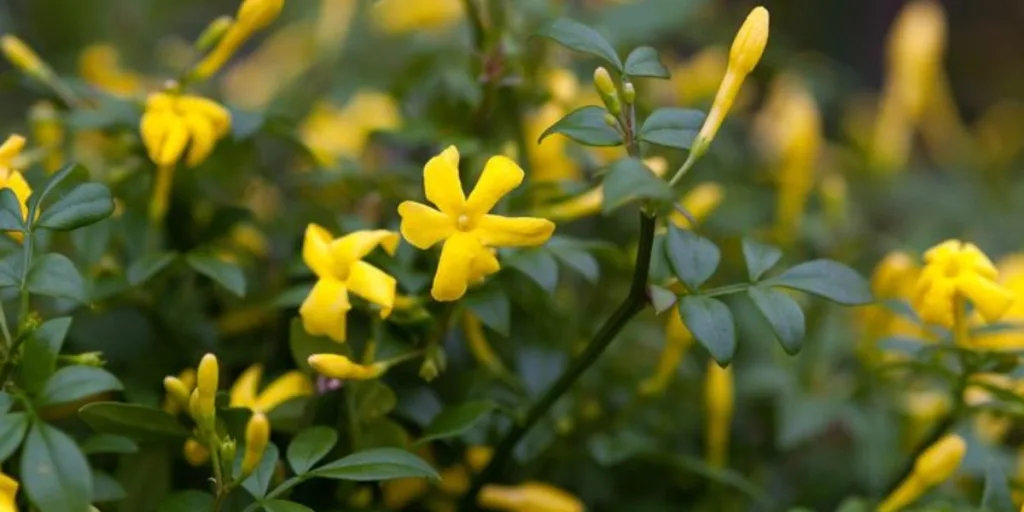
Yellow Jasmine
This stunning and unusual climbing plant has poisonous yellow flowers with a strong scent. It can grow to a height of 15 meters thanks to its strong roots and rhizome-forming stem that extends into the ground. The leaves are lanceolate, oval, entire, and opposite. The fragrant flowers have an axillary yellow colour. Each of the five calyx’s parts has a small lanceolate lobe. The fruit is a pod that contains numerous winged seeds. April to May is when it blooms.
Orange Cosmos
The Asteraceae family includes the annual herbaceous plant Cosmos sulfurous, indigenous to Central America, particularly Mexico. It grows in herbaceous clumps ranging from thirty to ninety centimetres, occasionally reaching almost two meters. Several cultivars of yellow, orange, or reddish flowers, varying in size and colour, are available right now.
The leaves develop oppositely on the thin, hairy, round, green stems that grow vertically. The leaves themselves are petiolate, elongated, and triangular in shape. They are approximately twenty to twenty-five centimetres long and have a dark green colour widely divided into elongated leaflets.
It blooms in the summer and has yellow or orange flowers, though some varieties also have red flowers. The flowers are about six centimetres in diameter. Their oval, elongated petals with uneven yellow or orange tips resemble daisy flowers. There are bicolour cultivars with striking yellow-orange blossoms. Typically, the flowers are bisexual and draw pollinating insects such as bees, butterflies, and hummingbirds. They also work well as cut flowers.

Orange cosmos for gardens
Native Mexican Flowers
FAQS
What is the garden of flowers called in Mexico?
Aztec pleasure gardensXochitla, which means “flower place,” was the general term for gardens; xoxochitla, which means “place of many flowers,” was a variation.
What is the traditional Mexican flower?
Dahlia Native to Mexico, dahlias are valued for their edible, medicinal, and decorative qualities. They are also popular as pot plants and cut flowers around the world. It was designated as Mexico’s National Flower in 1963.
What are Mexico’s most popular flowers?
The dahlia is still the most widely used flower in Mexico despite being the country’s national flower. Dahlia tubers have cultural significance since the Aztecs utilized them as a food source and a remedy for epilepsy.
What is a Mexican garden?
The focus of a Mexican or Southwest garden is on friends and family. The area is meant to serve as a place where people can unwind, eat, and mingle. The architecture and style of Moroccan, Moorish and Spanish Colonial gardens influenced Mexican garden design. The striking colour scheme is the most prominent feature.
Do flowers grow in New Mexico?
Sunflowers, rudbeckias (black-eyed Susan and gloriosa daisy), Shasta daisies, and numerous other plants thrive in New Mexico. Even pansies will thrive in the fall and spring (and occasionally in the winter). There should not be any trouble finding flowering plants to grow, as there are undoubtedly many more than you can fit into most landscapes.


One Comment